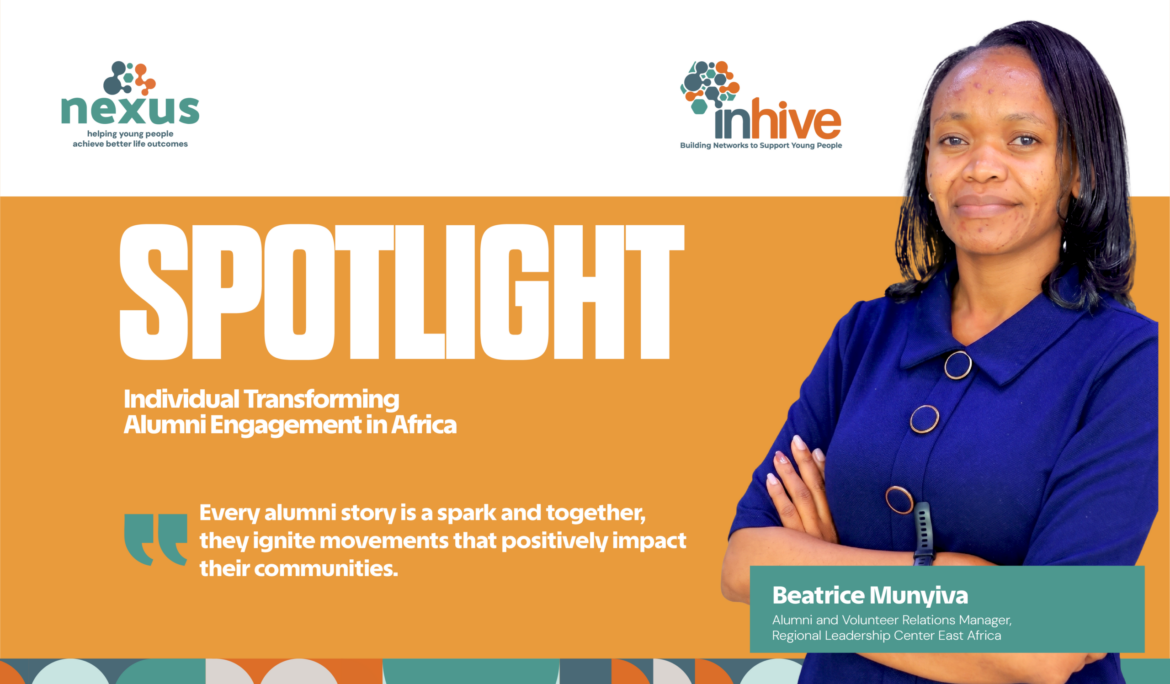
Beatrice Munyiva: Individual Transforming Alumni Engagement in Africa
Q: What is your role in strengthening alumni engagement at your institution or network?
As the Alumni and Volunteer Relations Manager at the Regional Leadership Center East Africa, I design and implement programmes that connect alumni across 14 countries. These programmes foster mentorship and collaboration while supporting alumni to continue creating a positive impact in their communities, countries and across Africa.
Q: What motivated you to become involved in alumni engagement?
My journey in alumni relations began at my alma mater, USIU-Africa, where I worked as an Alumni Relations Officer for nearly four years. Interacting with alumni from 73 nationalities and witnessing their impact was deeply inspiring.
When another opportunity in alumni relations arose at the Regional Leadership Center East Africa, I embraced it. I was motivated by the belief that alumni networks are powerful engines for change and that connecting young leaders enables them to amplify their impact.
Q: What leadership approaches have helped you strengthen your alumni community?
I emphasise collaborative leadership, listening to alumni voices and co-creating initiatives with them. Working with alumni volunteers who lead country chapters has also strengthened engagement.
These volunteers understand their respective country contexts and are well-positioned to organise relevant programmes and activities that bring alumni together.
Q: What achievement in alumni engagement are you most proud of?
I am proud of developing a capacity-development module and implementation plan aimed at strengthening alumni-led organisations and country chapters. The initiative benefited 1,543 young leaders.
Fourteen country chapters across East and Central Africa also recorded capacity improvements across three rounds of capacity-development assessments.
Q: How has your alumni engagement work created opportunities for alumni
Alumni have gained access to mentorship from fellow alumni and industry experts, professional networks, funding opportunities and platforms where they can showcase their initiatives and leadership skills.
Q: Can you share a story that illustrates the impact of your alumni engagement efforts?
Through peer mentorship, alumni have stepped outside their comfort zones and expanded their impact.
An alumna from the Democratic Republic of Congo who was mentored by an alumna in Kenya shared:
“The programme expanded my professional network and opened doors to new partnerships and collaborations. Beyond the practical benefits, the mentorship programme boosted my confidence and empowered me to take calculated risks. By overcoming self-doubt, I stepped outside my comfort zone and explored new avenues for growth.”
Q: Have your alumni network activities contributed to systems change?
Yes. Alumni advocacy has influenced policy discussions across East Africa, with alumni-led initiatives contributing to policies at the national level.
One example is Doris Mollel, who founded the Doris Mollel Foundation to support neonatal care in Tanzania. Having been born prematurely, Doris has used her organisation to donate incubators to hospitals, raise awareness about maternal health and advocate for better policies, including extended maternity leave for mothers of premature babies.
Her work has helped save newborn lives and contributed to systemic improvements in healthcare. She received the Outstanding Alumni in Health Award during the 2023 Alumni Impact Awards held at Kenyatta University.
Q: Which strategies have been most effective in engaging alumni?
Alumni country chapters have played a significant role in strengthening engagement and creating relevant opportunities based on alumni sectors and interests.
Involving alumni as mentors, judges and speakers has also helped them remain connected to the programme. Capacity-development opportunities have strengthened alumni-led organisations and enabled alumni to access opportunities within their countries and globally.
Q: How do you ensure that your alumni engagement work is inclusive?
We intentionally include alumni from marginalised communities in our programmes and activities. We also promote gender-balanced leadership within country chapters and encourage the inclusion of marginalised groups so that every alum feels seen, represented and valued.
Q: What tools and platforms do you use to keep alumni connected
We use email, WhatsApp groups, social media platforms and virtual conferencing tools to maintain active communication and support collaboration across borders.
Q: What has been the greatest challenge in building a strong alumni network?
The greatest challenge is sustaining consistent engagement and balancing expectations across a diverse and geographically dispersed alumni network.
Alumni country chapters help bridge this gap by connecting the regional programme with alumni at the country level.
Q: What key lesson would you share with other alumni engagement leaders?
Alumni engagement thrives when alumni are actively involved in co-creating programmes and activities.
Q: What is your vision for the future of alumni engagement?
I envision sustainable alumni country chapters and strong alumni-led organisations where alumni continue to drive transformation, collaborate across borders and serve as catalysts for Africa’s development.
Q: What advice would you give institutions seeking to strengthen their alumni communities?
Start by building trust and creating meaningful, lasting connections with alumni.